

Your 13-week cash flow forecast is probably lying to you.
You have constructed the model, verified the formulas, and combined the data for all departments. However, by week 8, things change and do not perform as you have projected. By week 11, you explain a shortage of 200K that has just manifested itself.
When you are wondering “why the 13-week cash flow forecast is inaccurate," you are not the only one. According to EY's 2025 Global DNA of the Treasurer Survey of 978 treasurers, 65% of treasurers stated that they did not have highly accurate 13-week forecasts. More troubling: U.S. Bank research found that 82% of business failures could be linked to mismanagement of cash flow. With corporate bankruptcies hitting a 15-year high in 2025, according to S&P data, the margin for error has never been smaller.
The issue does not lie with your spreadsheet skills. It is the root cause of the mismatch between what you are building and the flow of cash. Manual forecasting does not work when you are dealing with 200+ invoices each month in NetSuite, Sage Intacct, QuickBooks, or Dynamics 365 BC, with PO matching requirements and complex approval processes.
This blog discusses the 13-week cash flow forecast, common mistakes to avoid, and the common pitfalls in short-term cash flow forecasting and how to avoid them, as well as practicable solutions that have worked in mid-market finance departments.
What Is a 13-Week Cash Flow Forecast?

A 13-week cash flow projection is a weekly cash flow projection that rolls over 90 days. It is based on liquidity, unlike the monthly forecasts or annual budgets, where you will have cash to cover obligations.
13-Week Cash Flow Forecast vs Monthly Cash Flow Forecast
Understanding the 13-week cash flow forecast vs monthly cash flow forecast difference is critical:
See Centime in action
Our innovative AR, AP and business banking solutions are powerful alone, and even better together.
Schedule a tailored demo with a Centime expert.
13-Week Forecast:
- Granularity: Weekly (52 pieces of data per year).
- Method: Direct cash approach (follows real transactions)
- Time horizon: 90 days (one quarter)
- Use case: Management of short-term liquidity, operational management.
- Update frequency: Once a week or a day.
- Accuracy range: 70-95% depending on the week (higher for near-term).
Monthly Forecast:
- Granularity: Monthly intervals (12 data points per year).
- Method: usually indirect (readjusts on P&L)
- Time horizon: 12-18 months.
- Use case: Strategic planning, budgeting, board reporting.
- Update frequency: Monthly or quarterly.
- Accuracy range: 60-80% (varies by industry).
The 13-week model identifies timing problems that monthly forecasts fail to notice. Assuming you have a payment to a vendor of 200K in Week 3, but the receivables will not be obtained until Week 4, a monthly forecast may indicate that you have positive cash due in March, when the crunch of one month of late fees or emergency borrowing may actually happen.
According to GTreasury, weeks 1-4 typically achieve 90-95% accuracy, weeks 5-8 maintain 85-90%, and weeks 9-13 range from 70-85% depending on business predictability.
7 Reasons Your 13-Week Cash Flow Forecast Is Inaccurate
Let's diagnose the common pitfalls in short-term cash flow forecasting that make forecasts unreliable and the fixes that address each one.
See Centime in action
Our innovative AR, AP and business banking solutions are powerful alone, and even better together.
Schedule a tailored demo with a Centime expert.
1. You're Confusing Revenue with Cash
The mistake: Recording revenue out of your P&L and thinking that it is cash. This is one of the most frequent 13-week cash flow forecast common mistakes to avoid.
Revenue is recognized using accrual accounting for earned revenue. The cash flow impact is under the terms of payment, customer behavior, time of invoice delivery, and settlement of the payment methods. According to research by Agicap, 43% of middle-level businesses rely on unreliable predictions and experience a shortfall of over $50,000 every 20 days.
Why this makes your forecast inaccurate: You will be making a prediction based on recognition of revenue, not on the clearing of the cash in your bank account. This provides a 4-8 week lag to businesses with 30-60 days to pay, and entirely changes your weeks 1-8 forecasts.
The fix: Go straight into your AR/AP subledgers. Centime uses actual due dates on open invoices, scheduled payment runs, and past customer payment trends and sets payment terms to create forecasts, moving away from accrual-based forecasting to transaction-based forecasting.
2. Your Assumptions Are Optimistic
The mistake: Customers would be paying on time, vendors would be happy to receive payments at a convenient time, and nothing would come as a surprise. This approach is the other major solution to the question of "Why is my 13-week cash flow forecast inaccurate?"
Manual forecasting achieves 60-75% accuracy, while AI-driven models reach 85-95%. The difference? AI learns from actual payment behavior, not aspirational terms.
Why this makes your forecast inaccurate: You are making predictions about what should occur, rather than what does occur. In cases where 40-50% of your customers do not pay on time, but you are forecasting that 90% of your customers will pay on time, then you are systematically underestimating the availability of cash.
The fix: AI-powered systems analyze actual customer payment patterns. The EY survey discovered that treasurers who used AI reported 7 percentage points more accuracy in the case of a 10M company; the figure would be a savings of 700K per year on forecasting errors.
3. You're Missing Variable Expenses
The mistake: Fixed costs (rent, insurance, payroll) are taken, but the variables, such as freight, overtime, repairs, and tariffs, are omitted.
American Action Forum research demonstrates that tariffs alone would cost SMBs 85-100 billion yearly. However, most forecasts do not model tariff variability or seasonal freight surcharges, which may change by 15-20% each month.
Why this makes your forecast inaccurate: Variable costs are not seen until the point of strike. Variables that are not fixed, such as emergency repair, rush freight, or seasonal spikes in labor, do not appear in your planned transaction list; they do not appear in your forecast until the invoice is received.
The fix: Division of expenses into buckets (fixed, variable-bounded, highly variable) and application of historical variability patterns. To construct conservative buffers, forecast using the 75th percentile in highly variable categories.
See Centime in action
Our innovative AR, AP and business banking solutions are powerful alone, and even better together.
Schedule a tailored demo with a Centime expert.
4. Your Data Lives in Silos
The mistake: The extraction of data in ERP, banking, bill payment systems, CRM, spreadsheets, procurement, and payroll manually, and consolidation in Excel. This is one of the most time-consuming common pitfalls in short-term cash flow forecasting.
This takes 8-12 hours weekly, introduces errors (GTreasury notes the average spreadsheet has 1 error per 20 cells), produces version management issues, and goes out of date as soon as the work is done.
Why this makes your forecast inaccurate: When you finally export data across five systems, clean it, consolidate it, and create the forecast, you are dealing with data that is 2-4 days old. Your Tuesday projection is that of Friday, that is, without Monday, which has a collection of $42K, and Tuesday, which has a payment proposal of 38K.
The fix: Platforms like Centime's Built-for-NetSuite SuiteApp connect directly to your ERP's API, pulling real-time data: open invoices and due dates, bills and payment dates, bank balances, and payrolls. The amount of time spent decreases to 30 minutes per week.
5. You're Not Updating Frequently Enough
The mistake: Constructing forecasts monthly and leaving them to do nothing for 20 or more days. In cases where they ask, “why does my 13-week cash flow forecast inaccurate?” it is often the update frequency that is to blame.
Cash is dynamic. Every single day, your 13 weeks will be influenced by the events that happen: new customers, renegotiating their conditions, suppliers, machinery problems, and new offers. Monthly updates translate to weeks of flying in the dark.
Why this makes your forecast inaccurate: Every month, your business is performing hundreds of transactions. When you refresh the forecast, the one you had just was obsolete, which is a forecast of a cash position that was in existence some weeks ago, not what we are in now.
The fix: Automated systems are constantly updated when transactions are posted. Weekly (Monday morning) reviews of forecasts are done by the leading teams in areas of tactical decisions. According to EY research, infrequent updates in the volatile environment create forecast inaccuracy.
See Centime in action
Our innovative AR, AP and business banking solutions are powerful alone, and even better together.
Schedule a tailored demo with a Centime expert.
6. You're Making Timing Errors at Scale
The mistake: Weekly forecasting, but making assumptions that do not represent the actual settlement date.
Timing flaws compound when working on 200+ monthly invoices. According to Treasury Management research, timing errors cost UK mid-market businesses £660,000 ($830K USD) annually in missed opportunities and emergency borrowing.
Why this makes your forecast inaccurate: You are forecasting on the basis of invoice due dates (when payment is “supposed” to take place), rather than actual payment dates (when cash clears your account). With 50 invoices per month with 5- 7 day timing variances, the week-level projections are directionally accurate but operationally useless.
The fix: Construct payment schedules that incorporate the delay in delivery, customer authorization timetable, payment start-up, and bank settlement. Centime's AI learn the patterns of “customer A pays 12 days after the invoice date; customer B pays 3 days after the invoice date.”
7. Finance Works in Isolation
The mistake: The forecasts are built by controllers in solitude as Sales extends credit terms, Procurement promises to make rush orders, and Operations plans to work overtime without the finance department being aware of them.
A VP of Finance at a $20M distributor explained, "I would present comfortable cash positions. Then the ops would receive a large retail order that needed an instant inventory increase. All of a sudden, I have to deal with 250K payments to suppliers that I did not expect during week 4.”
Why this makes your forecast inaccurate: The forecast is technically correct according to what finance knows, but operationally incorrect according to decisions occurring in real-time in sales, procurement, and operations.
The fix: Current systems generate cross-functional visibility. Quotes created by Sales with Net 60 terms that the Procurement cuts with rush POs also update automatically since they are designed off live ERP data. Your COO considers cash implications in advance; your VP of Sales considers term implications in marketing spending availability.
Step-by-Step Playbook: How to Avoid Common Cash Flow Forecasting Pitfalls

Now that we've identified the 13-week cash flow forecast common mistakes to avoid, here's your actionable playbook to fix them.
Step 1: Shift to Transaction-Based Forecasting
Export three reports per week from the ERP:
- Open AR aging (unpaid invoices due by date).
- Open AP aging (unpaid bills that are due).
- Scheduled payment runs.
The whole of the build weeks 1-4 is to be built using these transaction reports; there are no P&L estimates. This touches on the problem of the revenue vs. cash confusion trap.
ERP configurations:
- NetSuite: Reports > Financial > AR/AP Aging, filtering status of open, add column of payment terms.
- Sage Intacct: Cash Management Reports> AR/AP Aging Detail.
- QuickBooks: Reports Who Owes You/ What You Owe.
- Dynamics 365 BC: Finance/Finance Management > Payables/Receivables Reports.
Step 2: Apply Behavioral Adjustments
Divide actual payment performance based on 90-day history:
- Average days to payment by customer segment.
- Discount capture rates.
- Late payment percentages.
Create adjustment table:
| Customer Segment | Avg Days to Pay | Forecast Adjustment |
|---|---|---|
| Enterprise (>$1M) | Net + 10 days | Add 10 days |
| Mid-market ($250K-$1M) | Net + 5 days | Add 5 days |
| Small (<$250K) | Net + 15 days | Add 15 days |
| Government | Net + 30 days | Add 30 days |
Step 3: Categorize Expenses with Variability
To avoid missing variable expenses, organize them into three buckets:
Bucket 1: Fixed (±5%): Rent, insurance, subscriptions, debt service (predict at precise levels)
Bucket 2: Variable but bounded (±20%): Utilities, freight contracts, retainers (3-month rolling average ±15%)
Bucket 3: Highly variable (>20%): Spot freight, inventory, repairs, marketing (forecast at 75th percentile of 3-month history)
Step 4: Integrate Data Sources
Break down silos with API integrations. Priority order:
- Banking (real-time balances).
- Payroll (major predictable outflow).
- Bill payment platforms.
- CRM/pipeline (weeks 9-13).
Platform options:
- NetSuite: Centime is a Built-for-NetSuite SuiteApp with native integration.
- Sage Intacct: 2025 Release 3 highlights to enhance cash management, but the forecasting depth is still weak.
- QuickBooks: Limited native AI features; consider purpose-built platforms.
- Dynamics 365 BC: Strong Copilot + Azure AI forecasting, but needs AP/AR operational layer
Step 5: Establish Weekly Review Cadence
Resolve the issue of the small frequency of updates. Block 60 minutes every Monday:
- Minutes 0-10: Update bank balances.
- Minutes 10-25: Review actuals vs. forecast.
- Minutes 25-40: Update with new information.
- Minutes 40-50: Identify week-ahead decisions.
- Minutes 50-60: Document assumptions and risks.
Attendees: Controller, AP/AR Managers (quarterly), CFO, COO, VP Sales.
See Centime in action
Our innovative AR, AP and business banking solutions are powerful alone, and even better together.
Schedule a tailored demo with a Centime expert.
Step 6: Document Actual Timing
Controller, AP/AR Managers; quarterly, CFO, COO, VP Sales.
- Invoice receipt → ERP entry (X days).
- Three-way match completion (X days).
- Manager approval (X days).
- Payment batch schedule (which days?).
- Payment processing by method (ACH/check/wire).
- Funds leave the bank (X days).
Example: A manufacturing firm accumulates 11 days between invoice acquisition and cash inflow (30-day terms turn into 41 real days).
Map AR workflow:
- Invoice generation → customer receipt.
- Customer approval cycle.
- Payment initiation.
- Bank clearing in terms of payment.
Example: The distribution company takes 48 days from invoice generation to cash availability.
Step 7: Create Cross-Functional Visibility
Take finance out of its hermetics. Create role-based forecast access:
- CFO/CEO: Full forecast, any which way.
- COO: Cash effects of decisions regarding operations.
- VP Sales: Effect of payment conditions.
- AP/AR Managers: Payment priorities and collection targets.
Create a "Cash Impact Request" process decision above 25K, not at forecast.
Spreadsheets vs. Software: Making the Decision
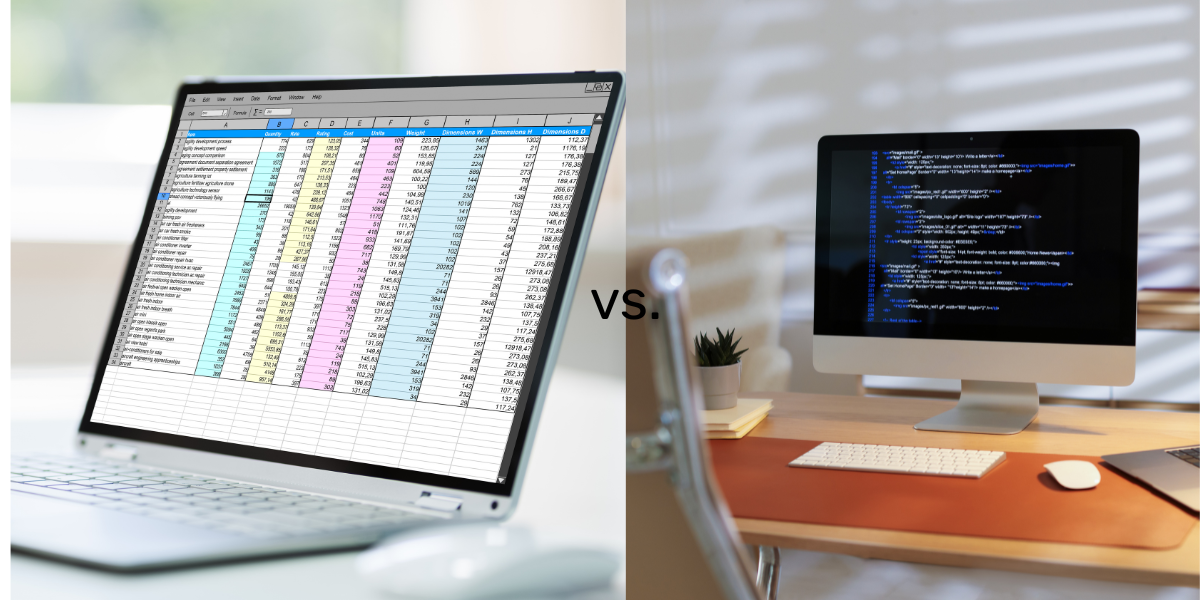
When addressing common pitfalls in short-term cash flow forecasting tool and how to avoid them, the spreadsheet vs. software question matters.
| Factor | Spreadsheet | Software |
|---|---|---|
| Setup Time | 2-4 days | 1-2 days |
| Monthly Maintenance | 15-25 hours | 3-5 hours |
| Data Lag | 1-7 days | Real-time |
| Accuracy | 60-75% | 85-95% |
| Cost | $0 software, $8K-15K labor | $3K-8K software, $2K-4K labor |
Stay with spreadsheets if:
- Processing less than 100 transactions monthly.
- Cash flow impact is predictable.
- Weekly updates are sufficient.
- 70% accuracy is acceptable.
Move to software if:
- Invoice processing 200+ invoices on a monthly basis.
- Multifaceted PO similarity of workflow.
- Need weekly or daily updates.
- The accuracy of the forecast affects the cost of financing.
Key Software Features to Look For
In the case of solving “why my 13-week cash flow forecast inaccurate,” the following features should be given priority:
- Native ERP integration: Centime is Built-for-NetSuite, as well as native integration of Sage Intacct, QuickBooks, and Dynamics 365 BC.
- AI payment predictions: Train based on past behavior to shun rose colored assumptions
- Scenario modeling: Concurrent conservative/likely/optimistic.
- Bank aggregation: The real-time balance feeds remove data lag.
- Operational workflow integration: Predictions are updated when the transactions occur.
- Role-based access: Visibility, cross-functionally, but non-financially.
- Audit-ready reporting: Board reporting and covenant compliance.
According to Gartner, 59% of leaders in the finance department claim to be using AI in their role, with cash forecasting as one of the most common applications.
See Centime in action
Our innovative AR, AP and business banking solutions are powerful alone, and even better together.
Schedule a tailored demo with a Centime expert.
13-Week Cash Flow Forecast Template
Here's a ready-to-use structure that helps you avoid the 13-week cash flow forecast common mistakes:
| Week | Week Ending | Opening Balance | Cash In | Cash Out | Net Flow | Closing Balance | Runway (Days) |
|---|---|---|---|---|---|---|---|
| 1 | 2/28/26 | $450,000 | $185,000 | $220,000 | -$35,000 | $415,000 | 67 |
| 2 | 3/7/26 | $415,000 | $230,000 | $180,000 | $50,000 | $465,000 | 58 |
| 3 | 3/14/26 | $465,000 | $195,000 | $240,000 | -$45,000 | $420,000 | 42 |
Why 13-Week vs Monthly Forecasts?
This template structure highlights the 13-week cash flow forecast vs monthly cash flow forecast advantages:
- The granularity of week levels is used to resolve timing mismatches that are obscured by monthly aggregates.
- Rolling a 13-week window ensures that there is constant forward visibility.
- Actual cash movement is in line with transaction-based inputs (not accrual-based).
- The runway tracking demonstrates the number of days of operations that you can finance.
Industry customizations:
- Manufacturing: Prioritize the addition of raw materials, freight/logistics, and tracking tariffs/duties. Track on-hand inventory days and supplier lead time.
- Distribution: Splitting inbound/outbound freight, warehouse expenditure, and returns processing. Monitor sales velocity per week.
- Retail/E-commerce: merchant charges (2-3% of sales), marketplace payments, delivery expenses, refunds/returns (8-15 percent of sales).
- Professional Services: Track retainer collections, milestone payments, contractor payments, and client reimbursements. Manage unbilled and WIP conversion time.
- Scenario columns: Conservative (P25), Likely (P50), and Optimistic (P75) projections to establish breaking points where the worst-case is less than the minimum values.
Conclusion
When you have been thinking about “why my 13-week cash flow forecast inaccurate,” the solution is found not in your work quality but in the method. It can not compare to businesses that are doing hundreds of transactions monthly, where the forecasting is done manually using old information, assuming things will work out, and updating the forecast on a weekly basis.
The 13-week cash flow forecast common mistakes to avoid all stem from three structural gaps:
- Live data integration: Forecasts change with money flows and not when you remember to update them.
- AI-powered predictions: Learning based on real behavior, not ideal invoice conditions.
- Operational embedding: Decision-making within AP/AR processes.
The common pitfalls in short-term cash flow forecasting and how to avoid them involve systematic remedies: transaction-based forecasting, changes in behavior, modeling expense variability, a combination of data, frequent changes, timing recording, and visibility across functions.
In the mid-market, in NetSuite, Sage Intacct, QuickBooks, or Dynamics 365 BC, the ERP will give the transaction data but not cash intelligence. Centime bridges the divides with live ERP integration, AI forecasting, AP/AR automation, and business banking all in a single system.
Ready to fix your inaccurate forecast? Schedule a demo with Centime or explore our cash flow forecasting knowledge base.
FAQs
Q. Why is my 13-week cash flow forecast inaccurate?
The forecast you have arrived at is probably wrong because of one or more of seven common failures: using P&L-based forecasting (not transaction-based), being overly optimistic about the time to collect, omitting separate variable costs, multiple systems with siloed data, an infrequent update, scale issues, and isolated work of the finance department. According to the EY 2025 survey, only 65% of treasurers have a correct forecast- you are not alone.
Q. What are the most common 13-week cash flow forecast mistakes to avoid?
The top 7 mistakes: (1) Applying accrual revenue rather than cash transactions information, (2) Assuming that 40-50 percent of customers make on-time payments (when doing so), (3) Missing variable expenses such as freight and overtime, (4) Manually consolidating data from 5 or more systems, (5) monthly rather than weekly or daily, (6) recording actual payment settlement timing, and (7) constructing forecasts without sales, operations, and procurement groups generating the cash flows.
Q. How does a 13-week cash flow forecast differ from a monthly forecast?
The 13-week forecast operates on a weekly interval,s and the direct cash method (following the actual transactions), and the monthly forecast operates on monthly intervals, with many being indirect (adjusting following the P&L). According to GTreasury, 13-week forecasts are always accurate between 85 and 95% in the first 4 weeks of the year, compared to monthly forecasts, which are accurate between 60 and 80% because they are based on the transactions scheduled.
Q. What are common pitfalls in short-term cash flow forecasting?
Examples of common pitfalls are data silos taking 8–12 hours per week to consolidate, optimism bias (what should happen vs. what actually happens), timing errors due to failure to charge payment processing lags, missing variable costs not in scheduled transactions, and isolation (finance forecasting without operational visibility).
Q. How can I improve my 13-week cash flow forecast accuracy?
Enhance Accuracy: (1) Developing based on AR/AP transaction data rather than P&L, (2) making historical adjustments based on customer segment in terms of payment behavior, (3) categorizing expenses in terms of variability and making conservative projections, (4) integrating in live ERP feeds, (5) reviewing weekly rather than monthly, (6) recording the workflows of actual payment timing, and (7) establishing cross-functional visibility. AI-powered platforms that learn from your payment history can boost accuracy from 60-75% to 85-95%.
See Centime in action
Our innovative AR, AP and business banking solutions are powerful alone, and even better together.
Schedule a tailored demo with a Centime expert.